


Steel bridges are among the most demanding applications in structural engineering. They carry immense dynamic loads, endure decades of environmental exposure, and must perform without compromise across their entire service life. In this context, quality assurance is not a formality; it is the foundation upon which every reliable, safe steel bridge is built.
Ensuring that a steel bridge meets its design intent requires strict adherence to internationally recognised standards at every stage: from raw material procurement and fabrication through to welding, surface treatment, and final installation. Compliance with these standards protects public safety, reduces lifecycle maintenance costs, and gives clients the confidence they need when commissioning major infrastructure.
At K. Liaromatis, commitment to international standards is built into every process. As a specialist in steel bridges construction, the company operates under a rigorous Quality Management System and holds certifications that reflect genuine technical excellence across the full production chain.
Let’s break down more about the standards and quality assurance we follow.
Quality Assurance in Steel Bridge Construction
Quality assurance governs every phase of steel bridge fabrication and delivery. At K. Liaromatis, quality practices are integrated through a dedicated quality assurance framework that governs every stage of project execution:
1. Quality Management System (QMS)
The QMS underpins all operations. It defines how work is planned, executed, inspected, and recorded, providing a traceable chain of accountability from material certification to project handover.
2. Internal and External Audits
Internal audits evaluate operational processes and identify opportunities for improvement. And external audits conducted by certification bodies provide independent verification of compliance to confirm that manufacturing facilities and engineering processes meet internationally recognised requirements.
3. Commitment to Global Standards
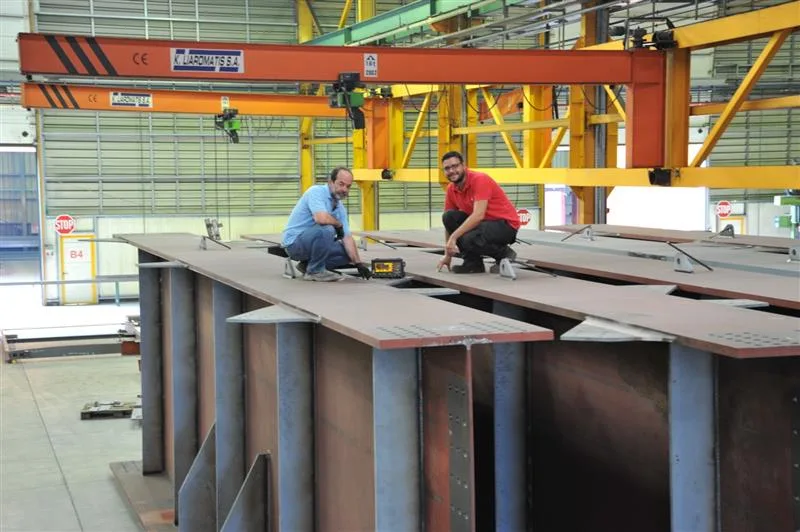
Steel bridges construction demands conformity with international technical standards, not just local regulatory requirements. We align its quality framework with European and ISO standards that are recognised across international markets, enabling consistent delivery regardless of project geography.
Let’s understand these standards in depth.
Key Standards Followed in Steel Bridge Projects
Three core standards define the technical framework for quality assurance in steel bridge fabrication and construction at K. Liaromatis.
- EN ISO 3834-2:2005 – Welding Management
The EN ISO 3834-2:2005 standard focuses on quality requirements for fusion welding of metallic materials. It establishes procedures for welding supervision, welder qualification, and documentation, and ensures that welding operations are carried out in a controlled environment with qualified personnel and verified procedures.
- EN ISO 9001:2015 – Quality Management
In steel bridges construction, ISO 9001 helps organisations maintain structured workflows, monitor performance indicators, and implement continuous improvement practices.
- EN 1090-1:2009+A1:2011 – Production Control
The EN 1090 standard governs the fabrication of structural steel components used in construction projects across Europe. It ensures that manufacturers follow strict production control procedures. Compliance with EN 1090 confirms that structural steel components meet the required performance and safety criteria.
Quality Checks Throughout the Steel Bridges Construction Process
1. Compliance with Standards and Systems
Meeting industry standards requires more than certification alone. It demands a systematic approach to implementing and maintaining compliance across all project stages.
- Product and Management System Standards
Steel bridges construction relies on integrated management systems that control design, manufacturing, and quality verification. These systems ensure that products meet technical specifications and regulatory expectations.
- Health, Safety, and Environmental Considerations
Steel fabrication facilities must follow strict health and safety protocols to protect workers and maintain operational stability. Environmental management practices are also integrated into production processes. This reduces environmental impact while supporting sustainable construction practices.
- Ensuring Reliable Outcomes
Reliable outcomes depend on careful planning, disciplined execution, and rigorous inspection procedures. By combining certified processes with experienced engineering teams, we deliver structures that meet both technical and operational requirements.
2. Welding Quality and Inspection
Besides staying compliant with standards and systems, welding integrity is also essential for the structural performance of steel bridges. Any defect in weld joints can compromise the load-bearing capacity of a bridge structure. For this reason, welding activities must follow certified procedures and undergo thorough inspection.
- Certified Welding Practices
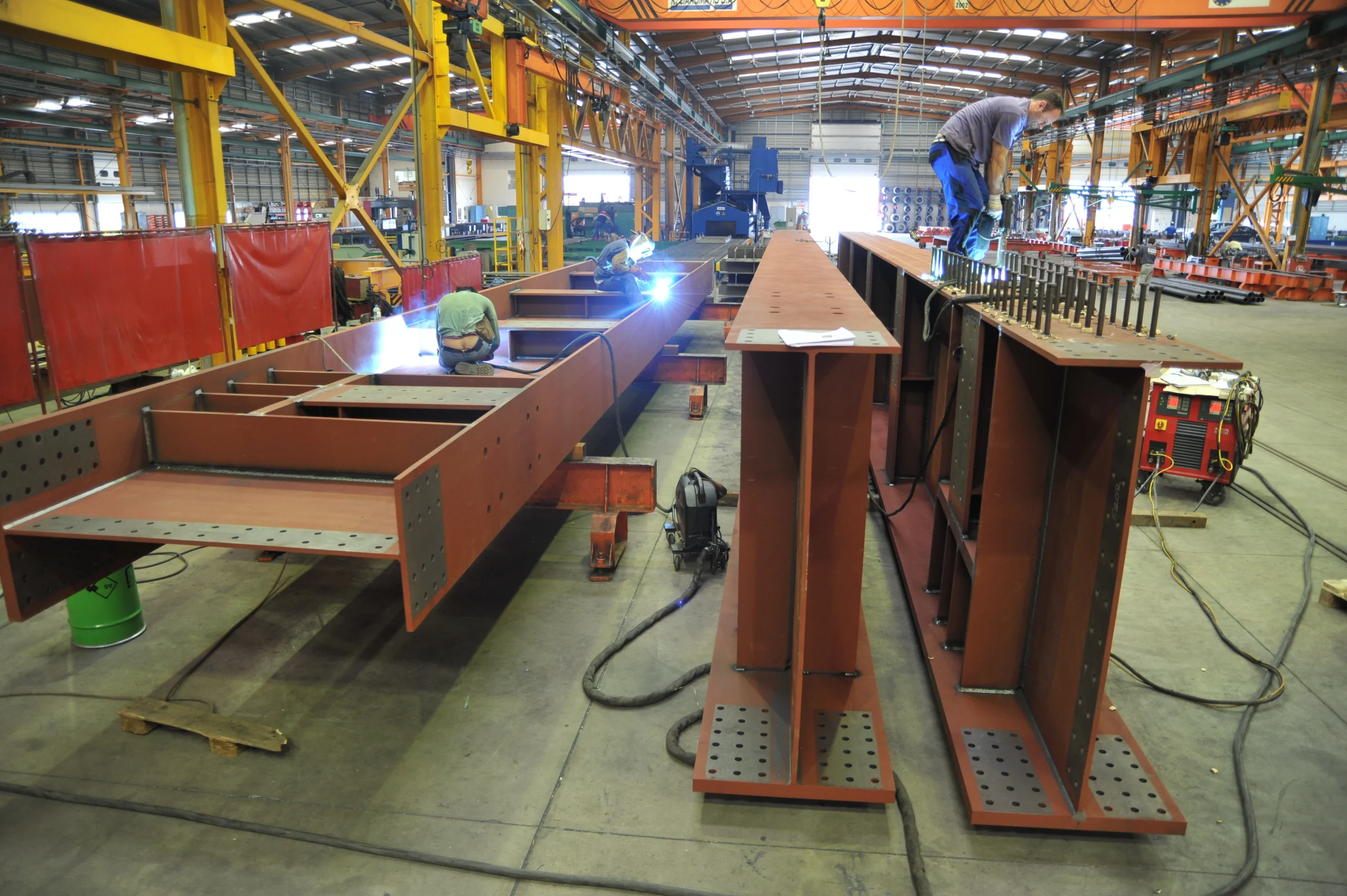
Certified welders perform welding operations using approved procedures and qualified equipment. These procedures define parameters such as heat input, welding techniques, and material compatibility.
- Non-Destructive Testing (NDT)
NDT allows engineers to verify weld integrity and ensure that structural connections meet safety requirements. It is used to evaluate weld quality without damaging the structure through ultrasonic testing, magnetic particle inspection, and radiographic testing, which help identify defects that may not be visible during visual inspections.
3. Production Control and Inspection
Production control ensures that steel components are manufactured according to approved engineering designs and specifications.
- Material and Fabrication Quality Checks
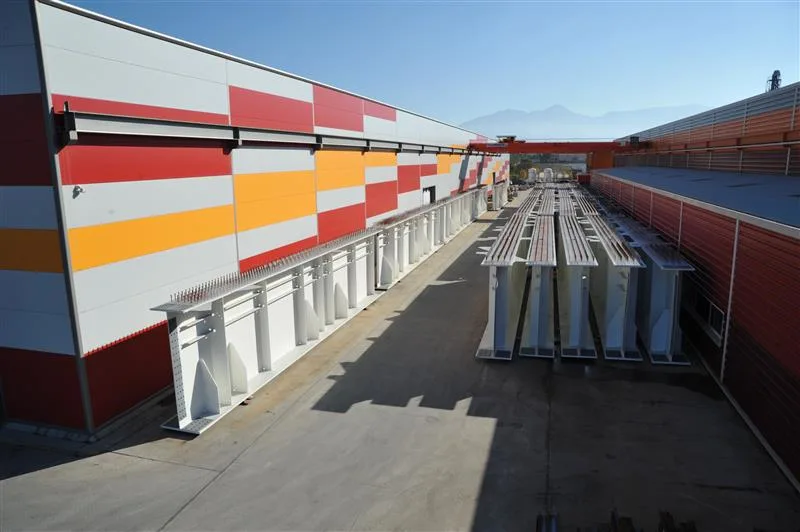
The fabrication process begins with careful material verification. Steel plates, sections, and other components must meet specified mechanical and chemical properties before they enter the production line.
- Surface Preparation and Inspection
Proper surface preparation is essential before coating or protective treatments are applied. Processes such as blast cleaning remove contaminants and create the required surface profile for coatings.
- Meeting Client Specifications
Each bridge project involves specific design requirements and technical specifications. Production teams must ensure that every fabricated component aligns with these requirements.
4. Surface Protection and Quality Control
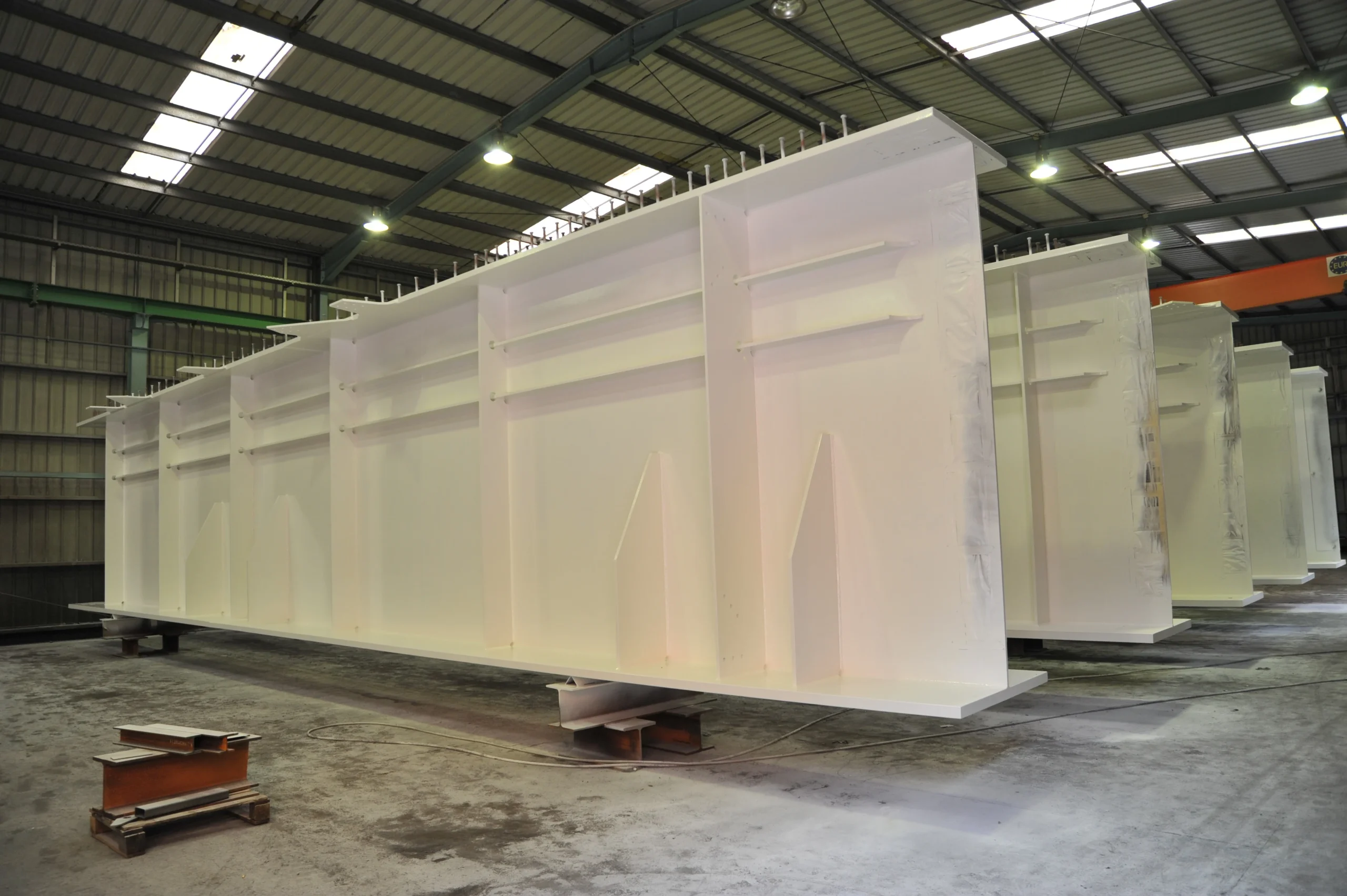
Steel bridges are exposed to moisture, temperature fluctuations, and atmospheric pollutants. Protective coating systems are therefore essential to ensure long-term durability.
- Certified Paint Inspection
Certified paint inspectors monitor coating application processes and verify that protective systems are applied according to specifications.
- BGAS-CSWIP Standards
Surface protection often follows BGAS-CSWIP standards, providing guidelines for coating inspection and corrosion protection. Compliance with these standards ensures that protective coatings perform effectively in demanding environments.
- Long-Term Durability Focus
Proper surface protection extends the service life of steel structures. Consistent inspection and maintenance help ensure that protective systems remain effective over time.
These steps aren’t just written; we also follow them rigorously throughout the steel bridges construction process. And K.Liaromatis is also certified for that.
Our Certifications and Industry Recognition
These accreditations and credentials verify that our operational systems and technical practices meet strict industry requirements.
Approved Certification Bodies
Welding staff and methods at K. Liaromatis are certified by TUV Rheinland, TUV HELLAS (Member of TUV NORD), and Moody Hellas S.A. These are internationally accredited bodies whose certifications carry recognition across European and global markets.
International Institutional Memberships
Beyond individual certifications, K. Liaromatis maintains institutional memberships in organizations such as the American Welding Society (AWS), the American Institute of Steel Construction (AISC), and the Steel Construction Institute (SCI) to support the development of best practices in steel construction.
This provides assurance that our engineering processes follow recognized standards, and helps us build credibility with clients, regulators, and project partners while supporting compliance with international infrastructure requirements.
Conclusion
Standards compliance and certification have become central measures that help in delivering structures that are safe, durable, and fit for purpose over a service life measured in decades.
EN ISO 3834-2:2005, EN ISO 9001:2015, and EN 1090-1:2009+A1:2011 provide the technical and management framework within which quality bridge fabrication takes place. Certified welding, NDT inspection, BGAS-CSWIP surface protection oversight, and independent certification by recognised bodies translate that framework into verifiable, reliable outcomes.
Liaromatis embodies this commitment across every project. By integrating international standards into every production process and maintaining accreditations that are recognised globally, we provide clients with the assurance that their steel bridge structures will perform as specified, from the first day of service to the last.
Subscribe To Our Newsletter
Stay updated with our latest insights, news, and exclusive updates!