


Across industrial and commercial sectors, the demand for high rise steel structures has grown steadily in recent years.
Businesses are expanding operations, logistics networks are becoming more complex, and modern infrastructure requires durable and adaptable building solutions. Steel has emerged as a preferred material for many large-scale projects because it offers strength, flexibility, and faster construction timelines compared to traditional building methods.
However, constructing high rise steel structures involves far more than assembling large steel components. These projects require detailed planning, precise engineering, and seamless coordination between multiple phases of construction.
For this reason, many organisations rely on an experienced steel building construction contractor, like K.Liaromatis, to manage the complexity of such projects. Working with specialised contractors helps ensure that steel structures are delivered with the accuracy and reliability required for modern industrial and commercial environments.
Let’s break down the challenges in high rise steel structure construction and how reliable contractors manage them for you.
Major Challenges in High Rise Steel Structure Projects
Despite their advantages, high rise steel structures present several technical and operational challenges that must be carefully managed throughout the project lifecycle.
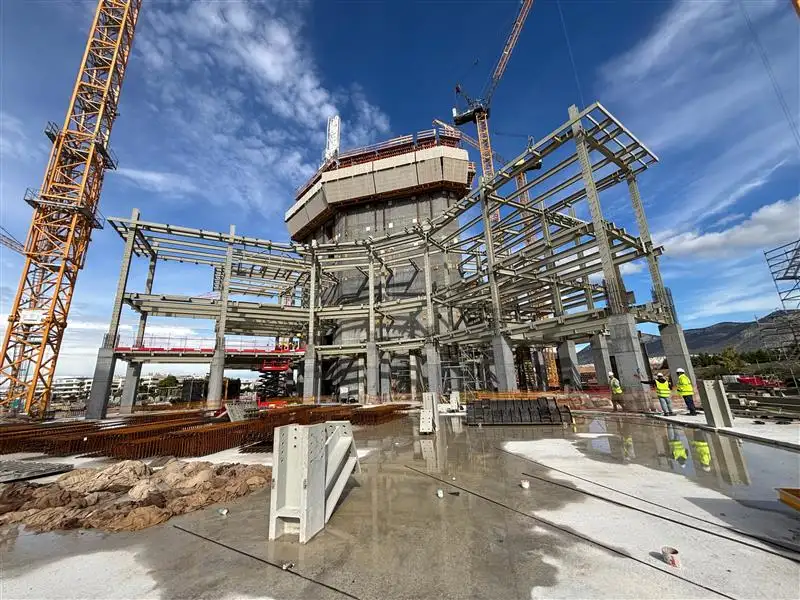
1. Complex Structural Design Requirements
Designing a high rise steel structure requires detailed engineering calculations and careful planning. Engineers must account for structural loads, environmental conditions, and operational requirements within the facility.
Industrial buildings may also need to accommodate specialised equipment, material handling systems, or large open spaces without structural interference. Meeting these requirements while maintaining structural stability adds another level of complexity to the design process.
2. Maintaining Precision Across Project Stages
Accuracy is critical in steel construction. Even small discrepancies between design, fabrication, and installation can lead to alignment issues or structural inefficiencies.
Each component must be manufactured according to precise specifications so that all elements fit together correctly during installation. Achieving this level of precision requires strong coordination between engineering teams, fabrication facilities, and on-site construction crews.
3. Managing Large-Scale Construction Projects
High rise steel structures are typically large-scale projects involving multiple teams, suppliers, and timelines. Coordinating these elements can become challenging, especially when projects involve complex logistics or multiple construction phases.
Without proper planning and project oversight, delays and operational inefficiencies can quickly affect overall project timelines.
4. Adapting to Changing Project Specifications
During construction, project requirements may evolve due to operational needs, technical adjustments, or design improvements. Contractors must be able to adapt to these changes while maintaining structural integrity and keeping the project on schedule.
Flexible planning and strong engineering capabilities are essential for handling such adjustments effectively.
How Partnering With the Right Contractor Solves These Challenges
The four challenges described above share a common root: fragmentation. They arise when responsibility is split across multiple parties, when data does not flow cleanly between project phases, and when no single entity has both the capability and the accountability to own the outcome. The solution is an integrated contractor who controls the full process from design through to installation.
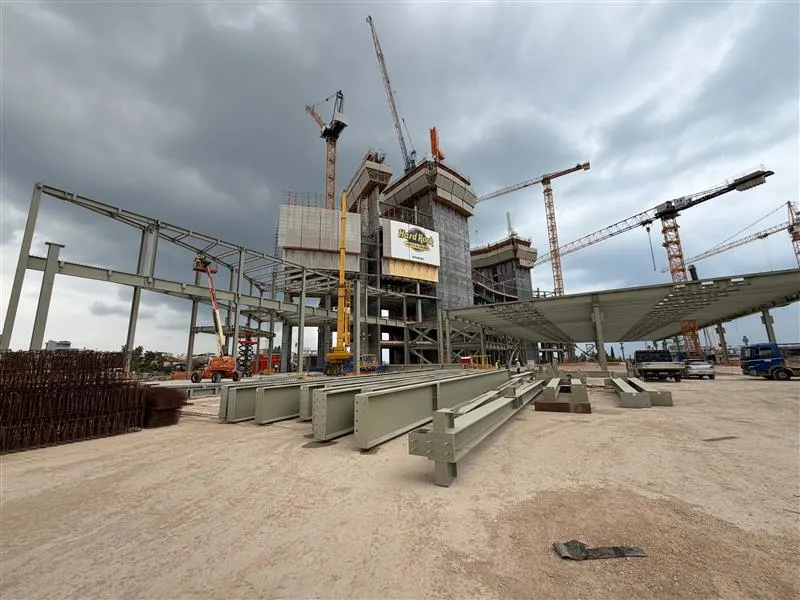
With over 50 years of experience in structural steel fabrication, K.Liaromatis has built its entire production model around this integrated approach – precisely because fragmentation is where high rise steel projects fail.
Solution 1: Single-Source Accountability Across Every Phase
Our team manages the complete production and delivery process under a single point of accountability. From conceptual design to final installation, every phase is owned and executed by using the same data and the same quality standards.
This structure eliminates the handoff problem, and deviations are identified and resolved internally. For project owners managing complex high rise developments, this consolidation of responsibility is one of the most tangible risk-reduction benefits available.
Solution 2: Integrated 3D Modelling That Feeds Directly Into Fabrication
We address the design-to-fabrication gap through a fully integrated engineering design process. The engineering team uses industry-leading tools, including 4D/5D BIM (Building Information Modelling), IFC (Industry Foundation Classes), and AVEVA Bocad Steel Interface to produce structural models that capture every connection, every section, and every tolerance requirement in precise detail.
Critically, these models are not simply design deliverables. They feed directly into the company’s Material Requirement Planning (MRP) system, where cutting instructions, drilling programmes, fabrication schedules, and shipping plans are generated automatically from the same data set.
For project owners, this means that what is designed is what is fabricated, with full traceability from the initial tender to project completion.
Solution 3: Just-in-Time Delivery Through a Global Supply Chain
Our facility is located just 15 kilometres from the Port of Patras, one of Greece’s primary international shipping hubs. This proximity, combined with a strong global supplier network and in-house transportation capability, enables Just-in-Time delivery of fabricated steel to project sites across Europe and the Mediterranean region.
Solution 4: Certified Quality Control from Shop Floor to Final Installation
Quality assurance at K.Liaromatis is not a post-production inspection step; it is embedded across every phase of the production process. We perform a certified quality assurance system that governs materials testing, welding standards, dimensional verification, and documentation at each stage.
Surface treatment is carried out in a closed shot blasting tunnel, followed by the application of specified paint systems, protecting steel against corrosion across the full design life of the structure.
Installation is performed by certified erection teams working to formally approved safety plans and international standards. Every project generates a complete quality record, providing the documentation trail that commercial and industrial clients require for regulatory compliance, insurance, and long-term asset management.
What Project Owners Should Ask Before Choosing a Steel Contractor
Before appointing a contractor for a high rise steel structure project, the following questions will quickly reveal whether a prospective partner has the integrated capability to manage all four challenges effectively:
- Does the contractor control both design and fabrication? If these are separate entities, ask how translation errors between them are managed and who bears responsibility when they occur.
- Is the engineering model directly connected to the fabrication process? Ask specifically how design data is transferred to the shop floor, and whether it is manual or automated.
- Who holds accountability if a tolerance error is discovered during erection? The answer reveals whether you are dealing with an integrated partner or a subcontracting chain.
- What is the contractor’s logistics model, and how is the delivery sequence controlled? For high rise work, the answer should reference the erection programme explicitly.
- Can the contractor provide a full quality and certification record for every phase? For commercial and industrial high rise steel, this documentation is non-negotiable.
Conclusion
The challenges inherent in high rise steel structures aren’t simply technical problems; they are organisational ones. They arise when responsibility is fragmented and when no single partner has both the capability and the accountability to own the full process.
Choosing a contractor with integrated end-to-end capability is how project owners and developers resolve these challenges before they become costly site problems.
With 50+ years of structural steel expertise, a fully integrated production process from engineering design to final installation, and a proven track record across Europe and the Mediterranean, K.Liaromatis delivers high rise steel structures that meet the most demanding technical specifications – on time, to tolerance, and with the certified quality record that modern projects require.
The right contractor is not simply a supplier; they are the single most important risk management decision on any high rise steel project.
Ready to discuss your project? Contact K.Liaromatis today.
Subscribe To Our Newsletter
Stay updated with our latest insights, news, and exclusive updates!